Has Merz faced reality after mindless remarks against Iran?
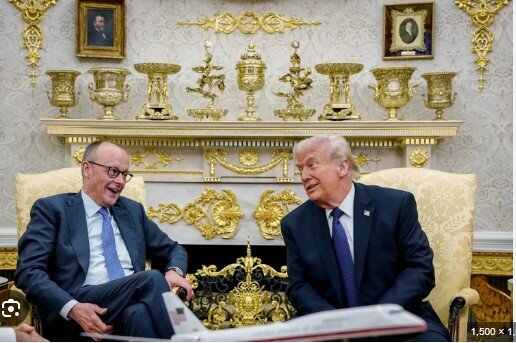
TEHRAN – After one year in office, it seems that German Chancellor Friedrich Merz is gradually coming to his senses or facing the realities on the ground by seeking to correct himself regarding his surprisingly repetitive and reckless remarks about Iran.
In the June 2025 war against Iran by Israel, which was later joined by the U.S., Merz, who was participating in the G7 summit in Canada, said Israel is “doing the dirty job for all of us.”
His thoughtless remarks drew sharp criticism from international law experts and senior analysts. Critics said the German leader’s statement further erodes international law and the rules-based order established in the wake of World War II, promoting a “law of the jungle” at the cost of global stability.
In an op-ed published by the Guardian, the Sydney-based international law professor Ben Saul said support for Israel’s war had no legal grounding and set a dangerous precedent. He described Israel’s attack on Iran as “part of a pattern of unlawful ‘anticipatory’ violence against other countries.”
The statement by Merz, whose country had always adopted a conciliatory approach toward regional and international conflicts since World War II, came as a shock to the world.
Again, when unrest erupted in Iran in early January 2016 over price increases, which were the result of Western-led illegal sanctions on the country, Merz made another hostile remark, saying that the Islamic Republic’s “days are numbered.”
Also, two days after the U.S. and Israel jointly started a war of aggression against Iran on Feb. 28, Merz claimed that appeals to international law had failed to achieve the purpose of Tel Aviv and Washington.
Contrary to Merz’s claims, both before the June and Feb. wars, Iran was negotiating with the U.S. for resolving differences over Tehran’s nuclear program with the mediation of Oman. Two days before the new war, negotiators from the two countries held talks in Geneva and were going to meet again. They also agreed on a meeting of nuclear experts in Vienna next week, where the International Atomic Energy Agency is based.
To justify the war on Iran, Merz claimed that Iran threatens Israel's very existence and bears responsibility for the acts carried out by groups such as Hamas and Hezbollah, adding, "Together with the United States and Israel, we share the goal of ending the terror of these regimes."
Now, noticing that the U.S. is being caught in the Iran quagmire and his country is feeling the economic pains of the war because of the disruption in the oil market due to the closure of the Strait of Hormuz, coupled with the failure of the U.S. in the war in which its president had vowed to bring Iran into submission in a matter of a few days, the German chancellor feels hopeless and has changed his tone, at least expediently.
For example, on April 27, in an unusually abrupt rebuke over the conflict, the chancellor admitted the U.S. entered the war without a "truly convincing" plan for an exit or for negotiations.
“The Iranians are obviously very skilled at negotiating, or rather, very skillful at not negotiating, letting the Americans travel to Islamabad and then leave again without any result," Reuters quoted Merz as saying.
He added, "An entire nation is being humiliated by the Iranian leadership, …. And so I hope that this ends as quickly as possible."
Without going into the details of his talks, it seems the chancellor is naïve enough when it comes to politics. It is quite understandable that resolving the disputes between Iran and the U.S. in a single meeting, especially after 40 days of war, cannot be resolved in one session. Add to this a set of problems accumulated over more than four decades, coupled with Iran’s mistrust of the U.S., which has been gravely deepened by the United States’ illegal and surprise war on Iran. This issue, even if the U.S. shows goodwill, will take weeks or months to resolve in a calm atmosphere.
By comparing the war on Iran to previous U.S. wars in Iraq and Afghanistan, Merz has come to recognize Iran's resilience against foreign invasion. It took Merz nearly two months to acknowledge that "the Iranians are obviously stronger than expected."
Though initially made a huge gaffe by claiming that Israel and the U.S. could not achieve their goals legally and thereby they attacked Iran, in an informal European Union summit in Cyprus on April 25, he said the war on Iran was “completely unnecessary”. His critique centered on the belief that the hostilities serve no justifiable purpose and are causing avoidable global instability.
To analyze Merz’s unsubstantiated claims about the war on Iran, there is no evidence that Iran was aware of the October 7 attacks or that Iran was supporting Hamas. Iran’s support for Hamas has been just moral. How had it been possible for Iran to help Hamas, which has been under siege from the air, sea, and land since 2007?
Furthermore, beyond Merz’s assessment that the Trump administration lacks a “truly convincing” strategy, the reality is that Iran is proactively setting the agenda and dictating the course of events. While Trump seeks an exit from the Iranian quagmire, he has found himself unable to do so. To extricate himself from his war of choice, Trump must now be prepared to meet specific demands, chief among them to give credible guarantees that the U.S. will never attack Iran again and that all sanctions on Iran are lifted forever.
Leave a Comment